When Bentley Systems acquired Cesium in 2024, the open-source 3D community held its breath: would the company behind 3D Tiles stay open, or disappear into a proprietary AEC stack? Two years on, the answer is taking concrete shape — and it looks less like absorption than like a bridge being built between two worlds that never talked well.
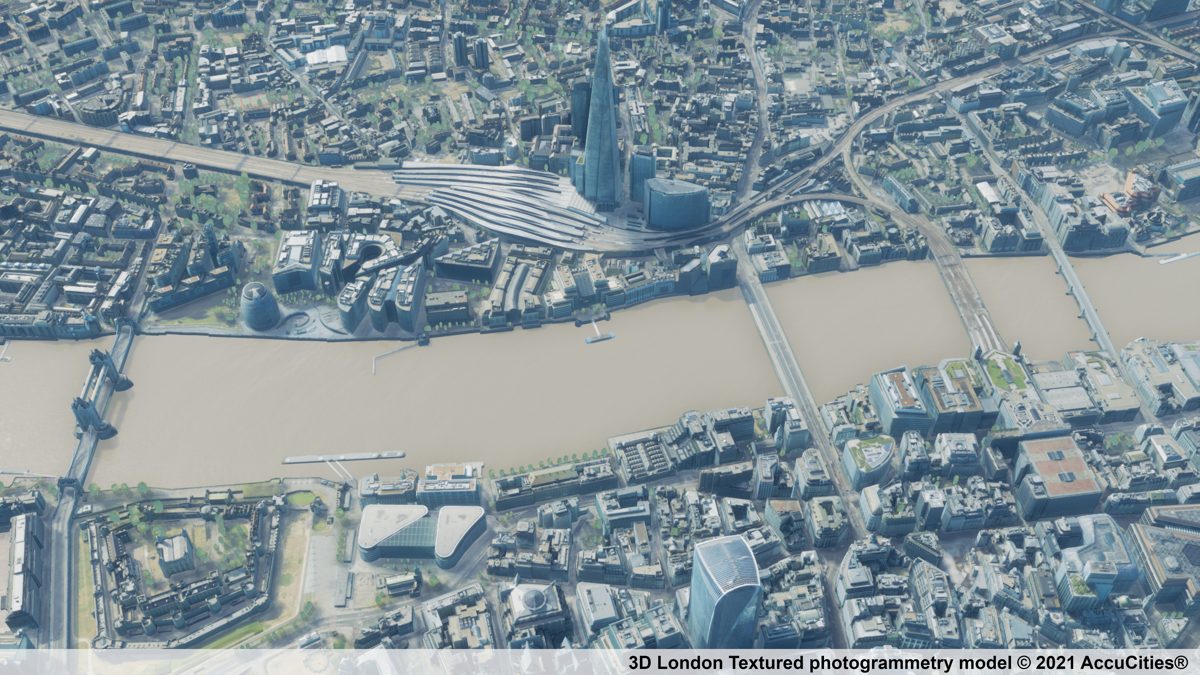
The pipeline is shipping
Cesium ion can now import iModels directly from Bentley Infrastructure Cloud and stream them as 3D Tiles, and the July 2026 release wave added tilers that convert NetCDF to voxel 3D Tiles and GeoJSON to 3D Tiles [1]. iTwin Capture integration is coming to Cesium ion Self-Hosted, bringing photo-based 3D reconstruction — meshes, point clouds, Gaussian splats — to organizations that keep everything on-premises [1]. The runtime ecosystem keeps pace: CesiumJS 1.143, Cesium for Unreal 2.28 (with Unreal Engine 5.8 support), Cesium for Unity 1.24, and Cesium for Omniverse 0.29 all shipped in the same July wave [1].
On the design-tool side, iTwin Platform APIs let Cesium developers convert MicroStation, Revit, AutoCAD, Navisworks, and Rhino models into optimized 3D Tiles, with ECSQL metadata querying and design-history visualization [3] — and MicroStation 2025 now supports 3D Tiles natively [2].
The signal from Philadelphia
In September 2026, Bentley opened a technology hub at Philadelphia's Curtis Center anchoring the Cesium team. Patrick Cozzi — Cesium's founder, now Bentley's Chief Platform Officer — described it as "a lighthouse for the open-source community, a collaborative engine for developers" [2]. Founders usually leave two years after an acquisition; this one got a building.
What it means for GIS professionals
The BIM-to-GIS handoff has been a decade of lossy exports and broken georeferencing. A pipeline where design models flow into an open, streamable, web-native format — one that CesiumJS, Unreal, Unity, and Omniverse all consume — makes the "urban digital twin" something you assemble rather than something you buy whole. If your city or campus work touches 3D, 3D Tiles is now the interchange layer to learn.