Global weather forecasting used to be the most exclusive club in geospatial computing: national centers, supercomputers, vendor feeds. In 2026, both NVIDIA and Microsoft open-sourced production-grade AI weather models with downloadable checkpoints — and suddenly a 15-day global forecast is something a GIS shop can run on a GPU.
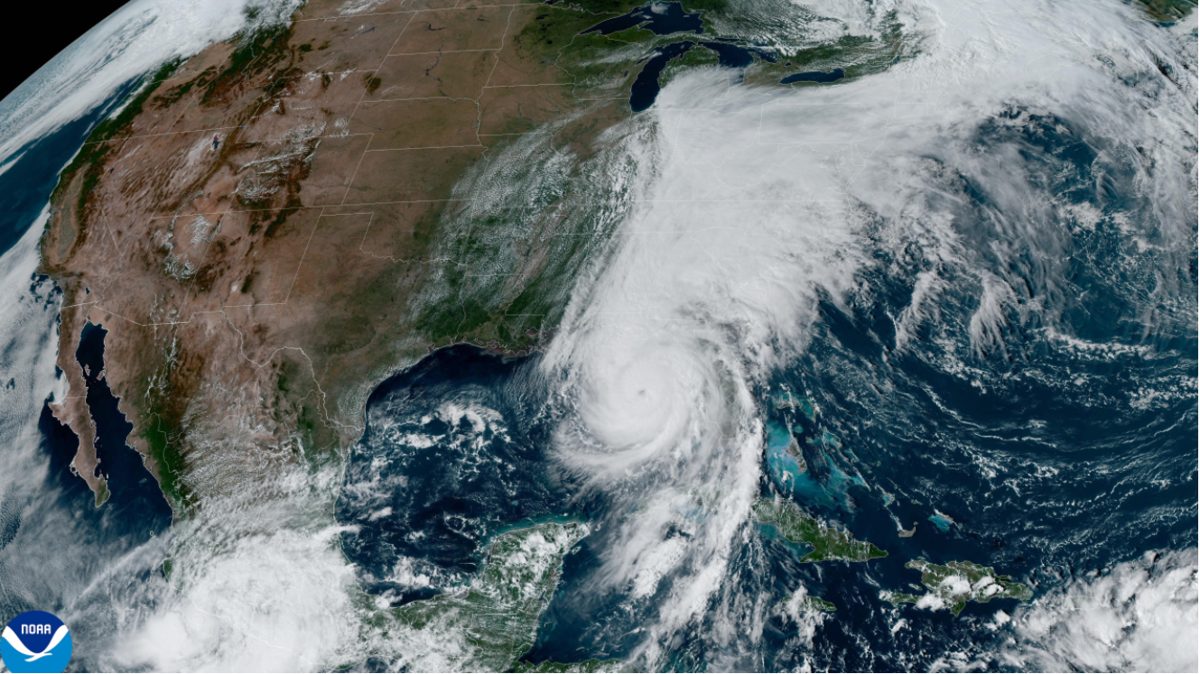
NVIDIA's Earth-2 family
Announced at the American Meteorological Society meeting in January 2026, the open Earth-2 model family covers the full forecasting pipeline: Earth-2 Medium Range (the Atlas architecture — 15-day forecasts across 70+ variables), Earth-2 Nowcasting (StormScope — kilometer-scale storm forecasts out to six hours), and Earth-2 Global Data Assimilation (HealDA — initial conditions computed in seconds on GPUs, releasing later in 2026) [1]. Medium Range and Nowcasting are available now via Earth2Studio, Hugging Face, and GitHub, and the user list is not hobbyists: the US National Weather Service, Israel Meteorological Service, Taiwan's CWA, The Weather Company, TotalEnergies, and Southwest Power Pool [1].
Microsoft's Aurora 1.5
Microsoft Research followed in July with Aurora 1.5, expanding the foundation model from 4 to 26 weather variables, adding hourly resolution and probabilistic ensembles — and outperforming ECMWF ensemble forecasts on 88.9% of evaluated variable/lead-time targets [2]. Tropical cyclone track errors dropped by roughly a third versus the original model. Checkpoints are open on GitHub and Hugging Face; adopters include Swiss utility BKW and the UK Met Office [2].
Why this belongs in a GIS blog
Weather has always been the awkward guest in GIS — critical to flood, fire, agriculture, and logistics work, but consumed as someone else's product. Open foundation models change the terms: forecast output becomes another raster you generate, version, and overlay, on your own schedule and budget. The near-term practical move isn't running models yourself — it's knowing these exist when a vendor quotes you for forecast data, and watching for the downstream services (many built on these exact checkpoints) that will undercut incumbent pricing. The skill to build now is evaluating probabilistic gridded forecasts — because "the model said so" is about to be a sentence your stakeholders hear a lot.